By Mohamed Yasil.M
The World Cup is without question the final word in cricket worldwide. And like the Olympics, there are teams from all around the world. But there is more than just watching the matches. And just because one team wins or looses, individual players can have a better or worse day than their teammates. Below are the numbers for the top five wicket-keepers in tests. And some are pretty amazing.
With amazing results, five wicket-keepers in test who are among the best in the field are listed below:
1. Mark Boucher with 475 dismissals, an average of 0.95, 4,693 runs and an average run of 29.89. Boucher is known for his swiftness with the gloves and is also a very good batsman. As a result he has always been a very good all round support for South Africa.
2. Adam Gilchrist with 416 dismissals, an average of 0.86, 5,570 runs and a runs average of 47.61. A lot of Australian cricket victories are due to untiring efforts of Gilchrist.
3. Another brilliant wicket keeper, batsman on the list is, Alec Stewart with 277 dismissals, an average of 0.67, 8,463 runs and a runs average of 39.55. Alec Stewart is from England side.
4. Yet another Aussie player to break all the records, Ian Healy with 395 dismissals and an average of 1.03, 4,356 runs and a runs average of 27.4.
5. Last but not the least, Rodney Marsh with 355 dismissals, an average of 1.3, with 3,633 runs and a runs average of 26.52.
Of course, like any player, the wicket-keeper must be a good batsman too. And it is very often a tough choice between two keepers, with one being the better batsman, and the other being the better keeper.
What are your thoughts? How well did they do? Are you disappointed in the results? Are the numbers above telling the whole story? Were there significant plays that the numbers alone don't show? Were there keepers who didn't make the list above because their team performed poorly and were eliminated early? Share your thoughts here...
Article Source: Ezine Article
Sunday, November 22, 2009

Choosing Cricket Bats For All Ages
By Mohamed Yasil
Cricket bats, used in the sport of cricket, have evolved over the years. Once longer with a shorter face, they are now paddle-shaped with a flat face and the back having a v-shaped ridge. The officials who regulate cricket monitor the bats used in games and ban any bats that do not used approved materials or have unacceptable modifications.
For example, cricket bats made with aluminum or with lightweight carbon are not allowed in official games. There are also restrictions for bat length and the width of the blade. While there is no weight restriction, most fall within the same range. However, each batsman knows their strength and capabilities and tries to choose the cricket bat that will help them achieve their top potential. Even with official regulation, it is possible for a cricket batsman to find the perfect cricket bat for their skills.
For some players, especially those who play on the rise, a cricket bat with a classic profile and one that is lightweight could be the best choice. Other players like to get forward when they bat, they should use cricket bats that have long and low middles. Some of these bats also have scoops on the reverse and these help increase the bat's performance.
There are also cricket bats specially designed for the top performing batsmen. For all around hitters there are bats that have contoured blades to increase the sweet spot and lightweight for excellent balance. And for the big hitters, there are cricket bat styles with larger sweet spots and bowed blades, and these come in at the higher end of the weight range.
There are even cricket bats designed for matches with limited overs. For these situations batsmen may want to choose a bat with a shorter blade with more wood behind the sweet spot and a contoured profile. If the cricket bat is for a junior player, choose one of the lighter weight bats for them to use when their first learning cricket. Younger players may want to try several styles of bat to determine which they like best. This should be encouraged so that younger players find the bat that works for them and helps develop their skills. As a young player progresses, bat changes may be necessary at intervals.
No matter which cricket bat you select, remember to follow the manufacturers instructions regarding knocking in the bat. Unless purchased pre-knocked in, cricket bats should be prepped before use by hitting the surface about eight thousand times with a cricket ball or bat mallet. This will compact the fibers inside the bat and will take about three to six hours to do. Once done, it should help it from snapping when you use it in a match.
Proper equipment care should be stressed to all players young and old. When not in play, keep your bat protected and in a safe place so it is always ready when you need it. A cricket bat can be costly and so they should be considered an investment and treated with care and respect.
Established in 1973, Morrant Group Ltd is a family run business with over 35 years experience in mail order team sports equipment. Father, Daughter, Son and staff are working hard every day to ensure that our company achieves its aim.We sell a range of sports gear, including [http://www.morrant.com/cricket_equipment/cricket_bats/4653_0c.html]cricket bats and goods. Please visit our website at [http://www.morrant.com]http://www.morrant.com.
Article Source: Ezine Article
Cricket bats, used in the sport of cricket, have evolved over the years. Once longer with a shorter face, they are now paddle-shaped with a flat face and the back having a v-shaped ridge. The officials who regulate cricket monitor the bats used in games and ban any bats that do not used approved materials or have unacceptable modifications.
For example, cricket bats made with aluminum or with lightweight carbon are not allowed in official games. There are also restrictions for bat length and the width of the blade. While there is no weight restriction, most fall within the same range. However, each batsman knows their strength and capabilities and tries to choose the cricket bat that will help them achieve their top potential. Even with official regulation, it is possible for a cricket batsman to find the perfect cricket bat for their skills.
For some players, especially those who play on the rise, a cricket bat with a classic profile and one that is lightweight could be the best choice. Other players like to get forward when they bat, they should use cricket bats that have long and low middles. Some of these bats also have scoops on the reverse and these help increase the bat's performance.
There are also cricket bats specially designed for the top performing batsmen. For all around hitters there are bats that have contoured blades to increase the sweet spot and lightweight for excellent balance. And for the big hitters, there are cricket bat styles with larger sweet spots and bowed blades, and these come in at the higher end of the weight range.
There are even cricket bats designed for matches with limited overs. For these situations batsmen may want to choose a bat with a shorter blade with more wood behind the sweet spot and a contoured profile. If the cricket bat is for a junior player, choose one of the lighter weight bats for them to use when their first learning cricket. Younger players may want to try several styles of bat to determine which they like best. This should be encouraged so that younger players find the bat that works for them and helps develop their skills. As a young player progresses, bat changes may be necessary at intervals.
No matter which cricket bat you select, remember to follow the manufacturers instructions regarding knocking in the bat. Unless purchased pre-knocked in, cricket bats should be prepped before use by hitting the surface about eight thousand times with a cricket ball or bat mallet. This will compact the fibers inside the bat and will take about three to six hours to do. Once done, it should help it from snapping when you use it in a match.
Proper equipment care should be stressed to all players young and old. When not in play, keep your bat protected and in a safe place so it is always ready when you need it. A cricket bat can be costly and so they should be considered an investment and treated with care and respect.
Established in 1973, Morrant Group Ltd is a family run business with over 35 years experience in mail order team sports equipment. Father, Daughter, Son and staff are working hard every day to ensure that our company achieves its aim.We sell a range of sports gear, including [http://www.morrant.com/cricket_equipment/cricket_bats/4653_0c.html]cricket bats and goods. Please visit our website at [http://www.morrant.com]http://www.morrant.com.
Article Source: Ezine Article
Five Batsmen Who Have Great Records on the Scoreboard!
By Mohamed Yasil
First one: There are many great cricket players in their sports. When you think of these great players the player that probably comes to mind first is Donald Bradman. Bradman, an Australian Cricketer was acknowledged as the greatest batman of all times. By the age of 22 he had set many records for high scoring, some of these records are still unbeaten, he is idolized by many Australians' during the height of the Great Depression.
Second one: Another one of the top cricket batsman is an Indian cricketer known as Sachin Tendulkar. In 2002 he was ranked as the second greatest test batsman of all time according to Wisden. Tendulkar is the highest scorer in both test matches and ODIs,. Tedulkar is also known for the most centuries in either form of the game. In 1997 he passed Laras record for the most runs scored in Test cricket, and went on to become the first batsman to score 12,000 runs in that form of the game.
Third one: Garfield Sobers born July 28. 1936 in the WEST Indies is regarded as crickets greatest ever all-rounder. In 1975 he was knighted by Queen Elizabeth II for his services to cricket.
Fourth: Another one of the best cricketers in the sport is an Australian native known as Allan Borden. Borden still holds the world title for the most consecutive Test appearances, a total of 153 and the most test as a captain. A left handed batter Borden held the world record with a 11,174 test runs until 2005 when it was broken by Brian Lara in 2005.
Last but not the least: Probably another one of the best cricket players is Viv Richards, he was voted one of the top 5 cricketers of the century in 2000 by a 100 member panel of experts. In 2002 he was chosen as Wisden as the greatest ODI batsman of all times.
Article Source: Ezine Article
First one: There are many great cricket players in their sports. When you think of these great players the player that probably comes to mind first is Donald Bradman. Bradman, an Australian Cricketer was acknowledged as the greatest batman of all times. By the age of 22 he had set many records for high scoring, some of these records are still unbeaten, he is idolized by many Australians' during the height of the Great Depression.
Second one: Another one of the top cricket batsman is an Indian cricketer known as Sachin Tendulkar. In 2002 he was ranked as the second greatest test batsman of all time according to Wisden. Tendulkar is the highest scorer in both test matches and ODIs,. Tedulkar is also known for the most centuries in either form of the game. In 1997 he passed Laras record for the most runs scored in Test cricket, and went on to become the first batsman to score 12,000 runs in that form of the game.
Third one: Garfield Sobers born July 28. 1936 in the WEST Indies is regarded as crickets greatest ever all-rounder. In 1975 he was knighted by Queen Elizabeth II for his services to cricket.
Fourth: Another one of the best cricketers in the sport is an Australian native known as Allan Borden. Borden still holds the world title for the most consecutive Test appearances, a total of 153 and the most test as a captain. A left handed batter Borden held the world record with a 11,174 test runs until 2005 when it was broken by Brian Lara in 2005.
Last but not the least: Probably another one of the best cricket players is Viv Richards, he was voted one of the top 5 cricketers of the century in 2000 by a 100 member panel of experts. In 2002 he was chosen as Wisden as the greatest ODI batsman of all times.
Article Source: Ezine Article
Tuesday, November 17, 2009
Indian Cricket Team - 2009
By Mohamed Yasil.M
Indian Cricket team have the powerful batting order and excellent bowlers during the 2008-2009 years. I have listed them below in details.
1.Sachin Tendulkar

Full name Sachin Ramesh Tendulkar
Born April 24, 1973, Bombay (now Mumbai), Maharashtra
Current age 36 years 209 days
Major teams India, Asia XI, Mumbai, Mumbai Indians, Yorkshire
Nickname Tendlya, Little Master
Batting style Right-hand bat
Bowling style Right-arm offbreak, Legbreak googly
2.Gautam Gambhir
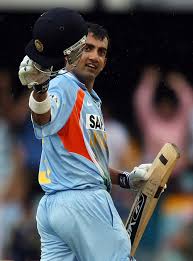
Full name : Gautam Gambhir
Born : October 14, 1981, Delhi
Current age : 28 years 35 days
Major teams : India, Delhi, Delhi Daredevils, India Red, Indian Board President's XI, Rajasthan Cricket Association President's XI
Batting style : Left-hand bat
Bowling style : Legbreak
3.Virender Sehwag

Full name : Virender Sehwag
Born : October 20, 1978, Delhi
Current age : 31 years 29 days
Major teams : India, Asia XI, Delhi, Delhi Daredevils, ICC World XI, India Blue, Leicestershire, Rajasthan Cricket Association President's XI
Batting style : Right-hand bat
Bowling style : Right-arm offbreak
4.Rahul Dravid

Full name Rahul Sharad Dravid
Born January 11, 1973, Indore, Madhya Pradesh
Current age 36 years 312 days
Major teams India, Scotland, Asia XI, ICC World XI, Karnataka, Kent, Royal Challengers Bangalore
Nickname The Wall
Batting style Right-hand bat
Bowling style Right-arm offbreak
5.Yuvraj Singh
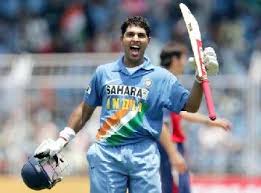
Full name Yuvraj Singh
Born December 12, 1981, Chandigarh
Current age 27 years 342 days
Major teams India, Asia XI, Kings XI Punjab, Punjab, Yorkshire
Batting style Left-hand bat
Bowling style Slow left-arm orthodox
6.MS Dhoni
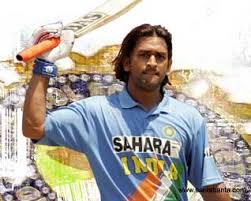
Full name Mahendra Singh Dhoni
Born July 7, 1981, Ranchi
Current age 28 years 135 days
Major teams India, Asia XI, Bihar, Chennai Super Kings, Jharkhand
Also known as Mahi
Batting style Right-hand bat
Bowling style Right-arm medium
Fielding position Wicketkeeper
7.Harbhajan Singh

Full name Harbhajan Singh
Born July 3, 1980, Jullundur (now Jalandhar), Punjab
Current age 29 years 139 days
Major teams India, Asia XI, Lancashire, Mumbai Indians, Surrey
Batting style Right-hand bat
Bowling style Right-arm offbreak
Indian Cricket team have the powerful batting order and excellent bowlers during the 2008-2009 years. I have listed them below in details.
1.Sachin Tendulkar
Full name Sachin Ramesh Tendulkar
Born April 24, 1973, Bombay (now Mumbai), Maharashtra
Current age 36 years 209 days
Major teams India, Asia XI, Mumbai, Mumbai Indians, Yorkshire
Nickname Tendlya, Little Master
Batting style Right-hand bat
Bowling style Right-arm offbreak, Legbreak googly
2.Gautam Gambhir
Full name : Gautam Gambhir
Born : October 14, 1981, Delhi
Current age : 28 years 35 days
Major teams : India, Delhi, Delhi Daredevils, India Red, Indian Board President's XI, Rajasthan Cricket Association President's XI
Batting style : Left-hand bat
Bowling style : Legbreak
3.Virender Sehwag
Full name : Virender Sehwag
Born : October 20, 1978, Delhi
Current age : 31 years 29 days
Major teams : India, Asia XI, Delhi, Delhi Daredevils, ICC World XI, India Blue, Leicestershire, Rajasthan Cricket Association President's XI
Batting style : Right-hand bat
Bowling style : Right-arm offbreak
4.Rahul Dravid
Full name Rahul Sharad Dravid
Born January 11, 1973, Indore, Madhya Pradesh
Current age 36 years 312 days
Major teams India, Scotland, Asia XI, ICC World XI, Karnataka, Kent, Royal Challengers Bangalore
Nickname The Wall
Batting style Right-hand bat
Bowling style Right-arm offbreak
5.Yuvraj Singh
Full name Yuvraj Singh
Born December 12, 1981, Chandigarh
Current age 27 years 342 days
Major teams India, Asia XI, Kings XI Punjab, Punjab, Yorkshire
Batting style Left-hand bat
Bowling style Slow left-arm orthodox
6.MS Dhoni
Full name Mahendra Singh Dhoni
Born July 7, 1981, Ranchi
Current age 28 years 135 days
Major teams India, Asia XI, Bihar, Chennai Super Kings, Jharkhand
Also known as Mahi
Batting style Right-hand bat
Bowling style Right-arm medium
Fielding position Wicketkeeper
7.Harbhajan Singh
Full name Harbhajan Singh
Born July 3, 1980, Jullundur (now Jalandhar), Punjab
Current age 29 years 139 days
Major teams India, Asia XI, Lancashire, Mumbai Indians, Surrey
Batting style Right-hand bat
Bowling style Right-arm offbreak
History of Cricket in India
History of Indian cricket - Before 1930s
By M.Mohamed Yasil
Zee Cric The game of cricket was introduced in India in the middle of the 18th century. On 3rd March 1845 the ‘Sporting Intelligence’ magazine carried a reasonably lengthy match report between ‘Sepoy’ cricketers and the European ones. The article clearly proved that Indian cricket was underway in a city called Sylhet, in modern day Bangladesh.
Zee Cric
An impressed reporter proudly stated “the most enthusiastic European Cricketers could not have played with more energy and cheerfulness than the Sepoys did”.
However, chroniclers of cricket unanimously suggest that the formation of ‘Parsi Oriental Cricket Club’ in Bombay in the year 1848 led to the start of organized cricket by the Indians.
Parsi cricket
The first Indians to take to the game were the Parsis of Bombay, an educated, well-to-do and progressive community. In 1848, the Parsi boys established the ‘Oriental Cricket Club’.
The emerging Parsi middle class supported cricket as a means of strengthening ties with the overlords, while intellectuals welcomed it as a renewal of physical energy for the race. Around thirty Parsi clubs were formed in the within two decades of the formation of the first club. They were named for British viceroys and statesmen and for Roman gods.
Hindu cricket
The Hindu’s took up the game of cricket with the primary reason that they did not want to fall behind the Parsis in any manner. The first Hindu club ‘Bombay Union’ was formed in 1866. Hindus started playing cricket due to social and business rivalry with the Parsis. Hindu cricketers sorted themselves on the lines of caste and region of origin.
One of the primary Hindu cricketer was Ramchandra Vishnu Navlekar.
Some of the main clubs were Gowd Saraswat Cricket Club, Kshatriya Cricket Club, Gujrati Union Cricket Club, Maratha Cricket Club, Teluu Youn Cricketrs etc.
“There is no more agreeable sight to me,” remarked the Mayor of Bombay in 1886, “than of the whole Maidan overspread by a lot of enthusiastic Parsi and Hindu cricketers, keenly and eagerly engaged in this manly game.”
Gymkhanas
The all-white Bombay Gymkhana, which even refused admission to Ranji, was established in 1875. The Europeans invited the Parsis to paly with them for the first time in 1877. This more or less became a regular feature though it was a decade before the Parsis’ eventually managed to win. Beginning from 1886, the Hindus also began playing an annual match with the Europeans.
With the efforts of Luxmani and Tyebjee families, also famous for their social work such as establishing schools and good work at the law courts, the Muslims had also set up their own cricket club in 1883. This was known as the Muslim Cricket Club.
Cricket in India got a huge impetus by the formation of Parsi, Hindu and Muslim Gymkhanas in the 1890s. The British alloted one plot each to the three major religious communities in the city, for their exclusive use ending their conflict with the colonizers.
Ranjit Singhji
A notable mention in this era is the vital contribution of the Black Prince, Prince Ranjit Singhji who had moved to England to study at Cambridge University and was given a cricket “blue” in his final year by the college.
He then went on to play county cricket for Sussex. He made his Test debut for England in 1896. This made him the first Indian to play Test cricket.
Zee Cric Ranjit Singhji was Wisden Cricketer of the Year in 1897. He scored a century in the second innings on his Test debut, making his only the second batsman for England to achieve this feat. Duing the year 1899 he amassed 2,780 runs during a season which was the highest aggregate ever made!
India’s most prestigious first-class cricket tournament – Ranji Trophy was named after him in order to honour this great cricketer.
The Bombay Quadrangular
It started as a contest between the Parsis and the Europeans and evolved thereafter. The Hindus joined in 1886. These matches came to be called the Presidency matches due to their ever-rising popularity. In 1907 a triangular tournament was started which involved the Parsis, Europeans and the Hindus.
It was in 1912 that the Muslims joined the league of the famous Bombay tournaments turning it into a Quadrangular. Neutral umpires were introduced for the first time in 1917. Uptil now, umpires were mainly appointed from the Bombay Gymkhana. However, all this changed and umpires began to be appointed from the non-competing teams.
In the 1920’s, the quadrangular tournament gained immense popularity. Players were being selected from all over the sub-continent region. This gave a huge boost to cricket in India and led to the start of several other tournaments all over the country.
In the year 1937, a new team called the Rests was also added to the already four teams turning it into a Pentangular tournament. However, in 1946 due to communal disturbances this Pentangular tournament was done away with, and a zonal competition came into existence.
The Nayudus from Nagpur
The Nayudu family spent thousands on the promotion of cricket. They formed a club in Nagpur that coached many underprivelaged boys and took care of their education provided they fulfilled the only condition, that is, to play cricket.
Zee Cric Such was the family’s fascination with the sport that C K Nayudu’s birth was celebrated by his granddad by organising a cricket match.
The family’s contribution proved fruitful as C.K Nayudu, the family’s illustrious son, went on to become one of the finest batsmen that India has ever produced.
One of Nayudu’s most memorable innings was his 153 in Bombay in 1926. Coming in an hour and thirteen minutes against six English top line bowlers spoke volumes of the progress made by Indian cricket. CK Nayudu was Wisden’s Cricketer of the Year in 1933 and was also nicknamed as the ‘Hindu Bradman’.
Formation of BCCI
A.E.R Gilligan’s MCC (Marylebone Cricket Club) toured India in 1926 and took on Bombay in a match that proved to be a turning point in the history of Indian cricket. As C K Naidu smashed 153, with elevan sixes and thirteen fours, for the Hindus, India began dreaming big. It eventually led to the formation of BCCI in 1928. Records prove that the first meeting was held on 4 December 1928 and was funded by the Maharaja of Patiala.
The first President of the Board was RE Grant Govan and the founding Secretary was AS De Mello. De Mello later went on to become Board President and was also involved in the creation of the Cricket Club of India. He also helped in establishing Brabourne Stadium which was India’s first permanent cricket venue in 1937.
Source URL: cricket.zeenews
By M.Mohamed Yasil
Zee Cric The game of cricket was introduced in India in the middle of the 18th century. On 3rd March 1845 the ‘Sporting Intelligence’ magazine carried a reasonably lengthy match report between ‘Sepoy’ cricketers and the European ones. The article clearly proved that Indian cricket was underway in a city called Sylhet, in modern day Bangladesh.
Zee Cric
An impressed reporter proudly stated “the most enthusiastic European Cricketers could not have played with more energy and cheerfulness than the Sepoys did”.
However, chroniclers of cricket unanimously suggest that the formation of ‘Parsi Oriental Cricket Club’ in Bombay in the year 1848 led to the start of organized cricket by the Indians.
Parsi cricket
The first Indians to take to the game were the Parsis of Bombay, an educated, well-to-do and progressive community. In 1848, the Parsi boys established the ‘Oriental Cricket Club’.
The emerging Parsi middle class supported cricket as a means of strengthening ties with the overlords, while intellectuals welcomed it as a renewal of physical energy for the race. Around thirty Parsi clubs were formed in the within two decades of the formation of the first club. They were named for British viceroys and statesmen and for Roman gods.
Hindu cricket
The Hindu’s took up the game of cricket with the primary reason that they did not want to fall behind the Parsis in any manner. The first Hindu club ‘Bombay Union’ was formed in 1866. Hindus started playing cricket due to social and business rivalry with the Parsis. Hindu cricketers sorted themselves on the lines of caste and region of origin.
One of the primary Hindu cricketer was Ramchandra Vishnu Navlekar.
Some of the main clubs were Gowd Saraswat Cricket Club, Kshatriya Cricket Club, Gujrati Union Cricket Club, Maratha Cricket Club, Teluu Youn Cricketrs etc.
“There is no more agreeable sight to me,” remarked the Mayor of Bombay in 1886, “than of the whole Maidan overspread by a lot of enthusiastic Parsi and Hindu cricketers, keenly and eagerly engaged in this manly game.”
Gymkhanas
The all-white Bombay Gymkhana, which even refused admission to Ranji, was established in 1875. The Europeans invited the Parsis to paly with them for the first time in 1877. This more or less became a regular feature though it was a decade before the Parsis’ eventually managed to win. Beginning from 1886, the Hindus also began playing an annual match with the Europeans.
With the efforts of Luxmani and Tyebjee families, also famous for their social work such as establishing schools and good work at the law courts, the Muslims had also set up their own cricket club in 1883. This was known as the Muslim Cricket Club.
Cricket in India got a huge impetus by the formation of Parsi, Hindu and Muslim Gymkhanas in the 1890s. The British alloted one plot each to the three major religious communities in the city, for their exclusive use ending their conflict with the colonizers.
Ranjit Singhji
A notable mention in this era is the vital contribution of the Black Prince, Prince Ranjit Singhji who had moved to England to study at Cambridge University and was given a cricket “blue” in his final year by the college.
He then went on to play county cricket for Sussex. He made his Test debut for England in 1896. This made him the first Indian to play Test cricket.
Zee Cric Ranjit Singhji was Wisden Cricketer of the Year in 1897. He scored a century in the second innings on his Test debut, making his only the second batsman for England to achieve this feat. Duing the year 1899 he amassed 2,780 runs during a season which was the highest aggregate ever made!
India’s most prestigious first-class cricket tournament – Ranji Trophy was named after him in order to honour this great cricketer.
The Bombay Quadrangular
It started as a contest between the Parsis and the Europeans and evolved thereafter. The Hindus joined in 1886. These matches came to be called the Presidency matches due to their ever-rising popularity. In 1907 a triangular tournament was started which involved the Parsis, Europeans and the Hindus.
It was in 1912 that the Muslims joined the league of the famous Bombay tournaments turning it into a Quadrangular. Neutral umpires were introduced for the first time in 1917. Uptil now, umpires were mainly appointed from the Bombay Gymkhana. However, all this changed and umpires began to be appointed from the non-competing teams.
In the 1920’s, the quadrangular tournament gained immense popularity. Players were being selected from all over the sub-continent region. This gave a huge boost to cricket in India and led to the start of several other tournaments all over the country.
In the year 1937, a new team called the Rests was also added to the already four teams turning it into a Pentangular tournament. However, in 1946 due to communal disturbances this Pentangular tournament was done away with, and a zonal competition came into existence.
The Nayudus from Nagpur
The Nayudu family spent thousands on the promotion of cricket. They formed a club in Nagpur that coached many underprivelaged boys and took care of their education provided they fulfilled the only condition, that is, to play cricket.
Zee Cric Such was the family’s fascination with the sport that C K Nayudu’s birth was celebrated by his granddad by organising a cricket match.
The family’s contribution proved fruitful as C.K Nayudu, the family’s illustrious son, went on to become one of the finest batsmen that India has ever produced.
One of Nayudu’s most memorable innings was his 153 in Bombay in 1926. Coming in an hour and thirteen minutes against six English top line bowlers spoke volumes of the progress made by Indian cricket. CK Nayudu was Wisden’s Cricketer of the Year in 1933 and was also nicknamed as the ‘Hindu Bradman’.
Formation of BCCI
A.E.R Gilligan’s MCC (Marylebone Cricket Club) toured India in 1926 and took on Bombay in a match that proved to be a turning point in the history of Indian cricket. As C K Naidu smashed 153, with elevan sixes and thirteen fours, for the Hindus, India began dreaming big. It eventually led to the formation of BCCI in 1928. Records prove that the first meeting was held on 4 December 1928 and was funded by the Maharaja of Patiala.
The first President of the Board was RE Grant Govan and the founding Secretary was AS De Mello. De Mello later went on to become Board President and was also involved in the creation of the Cricket Club of India. He also helped in establishing Brabourne Stadium which was India’s first permanent cricket venue in 1937.
Source URL: cricket.zeenews
Subscribe to:
Comments (Atom)